


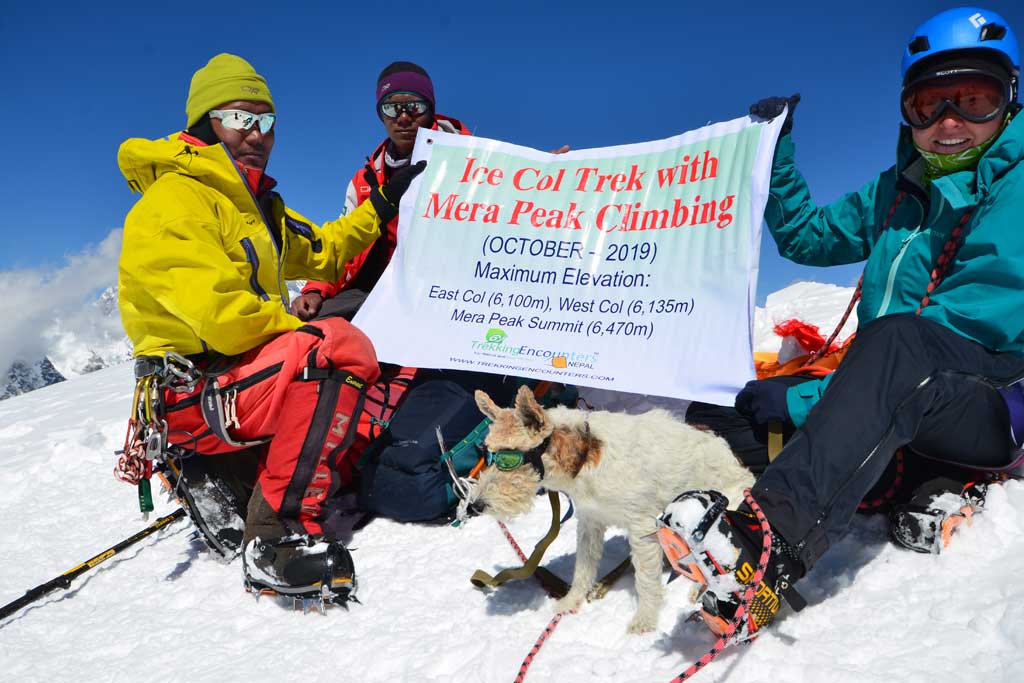
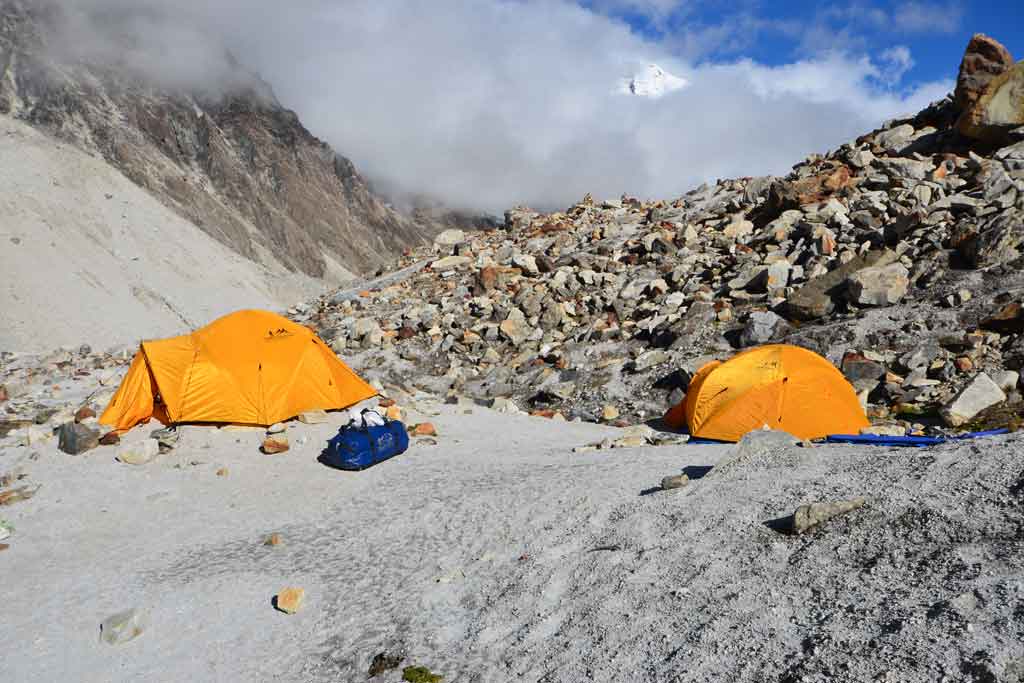
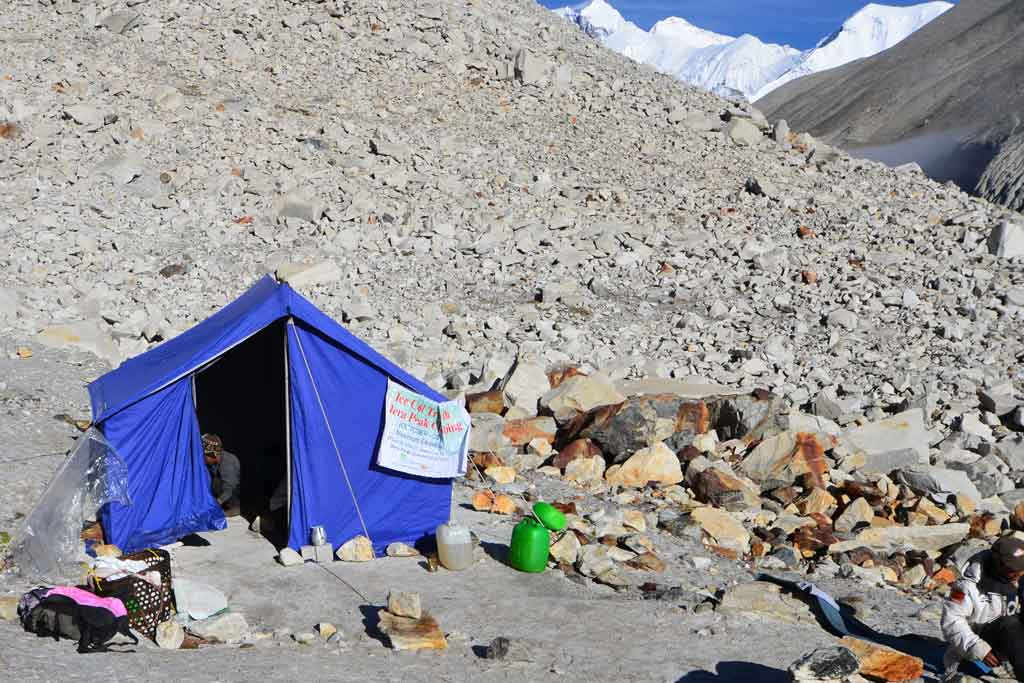
This is one of the wildest high mountain adventure treks that involve some rope climbing as well. It is a technical climb from Makalu Base Camp across Barun glacier and further to the Khumbu region of Nepal.
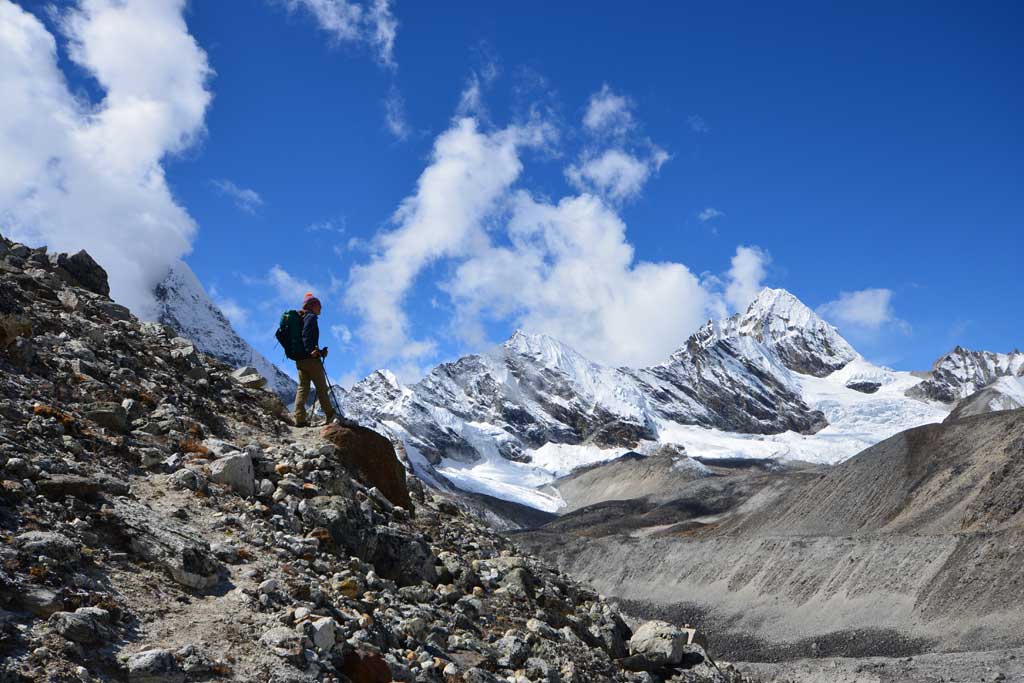
While crossing over the high passes of Sherpani/East Col (6,100m/20,014ft) and West Col (6,135m/20,129ft), it rewards with great views of some prominent peaks. The Ice Col adventure trek is a demanding Himalayan trek with spectacular views of the mountains above 8,000 meters.
They are namely Cho Oyu (8,201m/26,907ft), Lhotse (8,501m/27,890ft), Everest (8,848m/29,028ft), Makalu (8,463m/27,767ft) and Kanchenjunga (8,586m/28,170ft) en-route.
The trek has some steep slopes and good for only those with alpine experience and has high level of stamina. Since there are very few modern facilities, this trek requires a well-supported team with sensible equipment including ropes and ice-axe.
The trek connects with the Khumbu region at Chhukung crossing after the Amphu Lapcha pass (5,845m/19,177ft). The Amphu Lapcha (also referred to as the Amphu Labtsa) pass is one of the most dramatic crossings in the Himalaya having straightforward ice-fall.
The valley is high and open, fringed with broad moraines and sharp white peaks where the views of Chamlang (7,319m/24,013ft) and Baruntse (7,129m/23,390ft) are excellent. The Khumbu region has some pristine Sherpa villages and monasteries along the Everest Base Camp trail.
Namche Bazaar is the popular Sherpa hometown. There is a possibility of taking a side trip to the world famous Everest Base Camp and Kalapatthar. The trek finally ends at Lukla.
The entire Makalu-Barun, Hinku (Honku) valley and Khumbu region has a unique landscape that shelters some of the rare species of animals and plants in Nepal.
Highlights
- Nepal's highest trekking route
- Crossing of three major high passes-East Col, West Col and Amphu Lapcha
- A stunning panorama which includes 5 of the World's 8,000m peaks
- A venture into an isolated and un-spoilt wilderness of massive moraines and glacial lakes
- Possibility of combining Island Peak climb
Write a Review